
In the carefully orchestrated world of wedding traditions, where symmetry has long reigned supreme and matching sets dictated style, a quiet revolution is unfolding.
Today's most fashion-forward brides are embracing the unexpected beauty of asymmetry—challenging the notion that bridal jewelry must mirror itself to be meaningful. This shift represents more than aesthetic rebellion; it's a celebration of individuality, artistic expression, and the courage to let your wedding jewelry tell a story as unique as your love itself.
Asymmetrical Movement Takes Center Stage
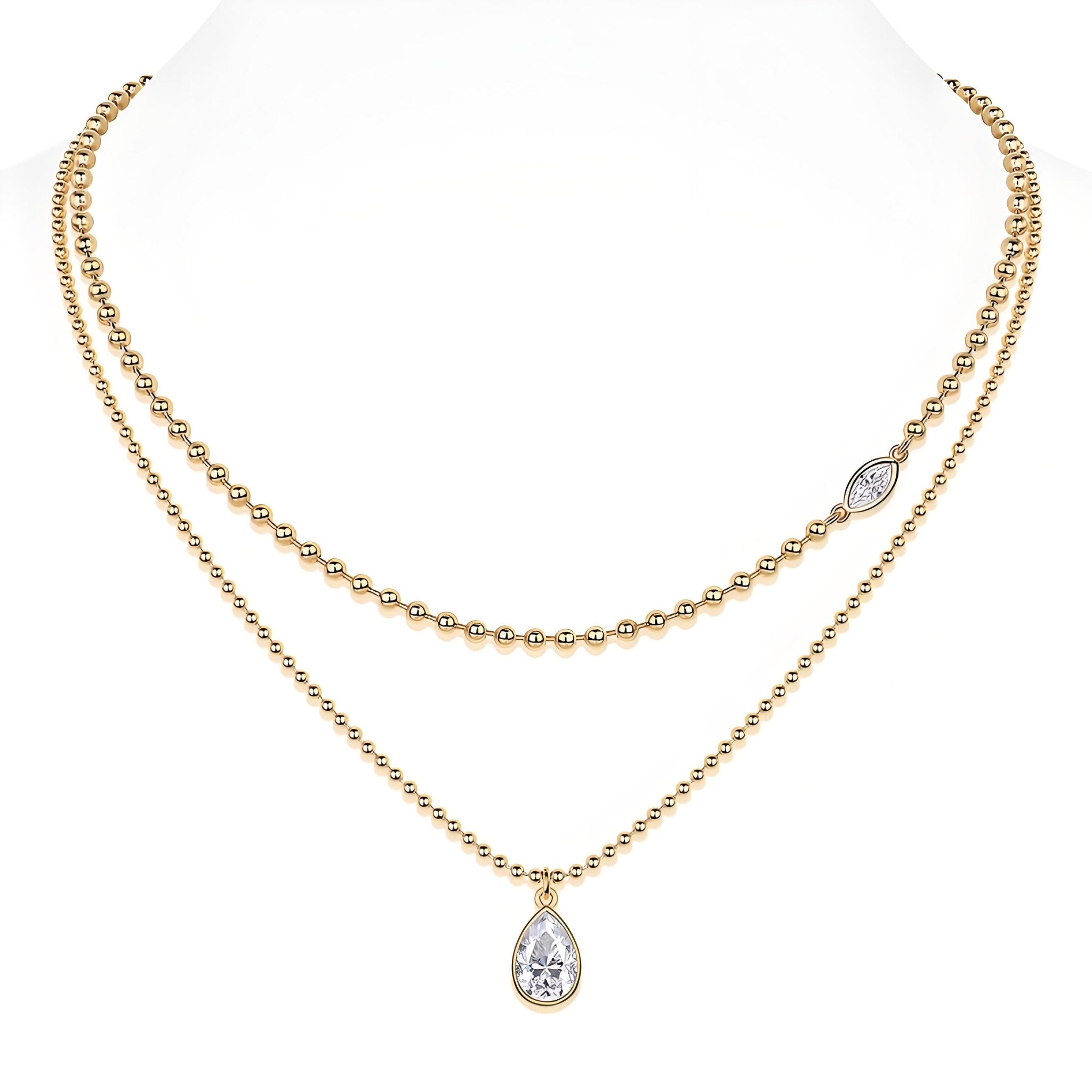
Walk into any contemporary jewelry atelier, and you'll notice something striking: the most interesting pieces no longer bow to bilateral symmetry. Earrings that deliberately mismatch, rings where stones cluster unexpectedly on one side, necklaces that cascade asymmetrically across the collarbone—these designs capture attention precisely because they defy our expectations.
What was once considered unconventional has emerged as the choice of confident brides who view their wedding day not as a performance of tradition, but as an authentic expression of self. This movement has deep roots in avant-garde jewelry design, where artists have long explored asymmetry as a means of creating dynamic tension and visual interest. But its migration into bridal jewelry represents something more profound: a generational shift in how we understand elegance itself.
Where previous eras equated sophistication with perfect balance, today's aesthetic celebrates the compelling energy of intentional imbalance—the way a single spectacular earring draws the eye, or how an off-center ring creates movement and intrigue on the hand. The psychology behind asymmetry's appeal is fascinating. Our brains are wired to notice deviation from pattern, making asymmetrical pieces inherently memorable.
Yet when executed with skill, these designs achieve their own form of balance—not through mirror symmetry, but through careful distribution of visual weight. It's the difference between a formal garden and a Japanese zen landscape: both beautiful, but one speaks to order while the other celebrates organic harmony.
Design Theory Behind Successful Asymmetry
Creating asymmetry that delights rather than disturbs requires understanding fundamental design principles. The most successful asymmetrical wedding jewelry achieves what designers call "dynamic equilibrium"—a sense of balance created through the thoughtful distribution of elements rather than their identical placement.
Think of it as a conversation between two sides that complement rather than echo each other. Visual weight becomes crucial in asymmetrical design. A cluster of small stones on one side might balance a single larger stone on the other. Negative space plays an equally important role—sometimes what's absent creates as much impact as what's present.
The most sophisticated asymmetrical pieces work because every element has been carefully considered for its contribution to the overall composition, creating tension that feels intentional rather than accidental. Color and texture offer additional tools for achieving asymmetrical harmony. A ring might feature diamonds graduating in size from one side, creating a sense of movement across the finger. Earrings could pair a simple stud in one ear with an elegant drop in the other, unified by matching metal or stone quality.
The key is ensuring that while the pieces differ, they clearly belong together—speaking the same design language even as they refuse to repeat each other. Scale and proportion demand particular attention in asymmetrical designs. Where traditional symmetrical pieces can rely on bilateral balance for stability, asymmetrical jewelry must achieve equilibrium through more nuanced means.
A too-heavy cluster on one side creates imbalance; too timid an approach fails to justify breaking symmetry in the first place. The sweet spot lies in designs bold enough to make asymmetry purposeful yet restrained enough to remain wearable and elegant.
Balance Principles for the Unconventional
Mastering asymmetry begins with understanding three fundamental balance principles: visual weight distribution, focal point management, and contextual harmony. Visual weight refers to how "heavy" an element appears to the eye—influenced by size, color, texture, and position. In asymmetrical design, equal visual weight matters more than identical elements.
A large emerald-cut stone can balance multiple smaller stones through its substantial presence and clean lines. Focal point management ensures the eye knows where to land. Highly asymmetrical pieces benefit from a clear primary focus—perhaps a stunning center stone positioned off-center, or a dramatic ear cuff that anchors one side of an earring pair. Secondary elements then support rather than compete with this focal point, creating a visual hierarchy that guides the observer's attention deliberately through the design.
Contextual harmony considers how your asymmetrical jewelry interacts with other elements—your dress, your hairstyle, your overall aesthetic. An asymmetrical earring pair works beautifully with an updo that reveals both ears clearly, allowing each piece its moment. An off-center ring gains impact when worn on a hand that will be prominently displayed, perhaps while holding a simple bouquet that won't compete visually.
Coordination Strategies for Asymmetrical Bridal Looks
The art of styling asymmetrical wedding jewelry lies in knowing when to layer and when to let a single piece shine. If you're drawn to dramatically mismatched earrings—say, a delicate stud in one ear paired with a cascading drop in the other—consider keeping your necklace minimal or skipping it entirely. The earrings become your statement, their asymmetry creating sufficient visual interest without additional competition.
Alternatively, you might choose symmetrical earrings and introduce asymmetry through your ring stack. An engagement ring with stones clustered to one side, paired with a simple curved wedding band that hugs its shape, creates intriguing negative space on the opposite side. This approach offers the unconventional appeal of asymmetry while maintaining balance through your overall silhouette.
Color strategy becomes particularly important when coordinating multiple asymmetrical pieces. Staying within a cohesive palette—perhaps all white metals with diamonds, or mixing rose gold with white diamonds—ensures that while your pieces may be asymmetrical, they read as a curated collection rather than a random assortment. Think of it as visual rhyming: the pieces don't match, but they harmonize.
Consider, too, the interplay between your jewelry and your bridal gown. An asymmetrical neckline pairs beautifully with asymmetrical jewelry, creating a cohesive narrative of modern elegance. Alternatively, pairing unconventional jewelry with a classic gown creates compelling contrast—the traditional silhouette providing a stable backdrop that allows your jewelry's personality to emerge.
Personality Expression Through Unconventional Guidelines
The brides who most successfully embrace asymmetry share certain qualities: they view their wedding as a creative expression rather than a rigid performance, they're comfortable being noticed and complimented for distinctive choices, and they understand that true elegance sometimes requires courage.
If you find yourself repeatedly drawn to the unusual, if the word "matching" makes you restless, if you'd rather have one extraordinary piece than a coordinated set—asymmetrical wedding jewelry might be your perfect expression. Ultimately, choosing asymmetrical wedding jewelry is an act of self-assertion—a visual statement that your union, like your jewelry, follows its own beautiful logic rather than prescribed rules.
This choice speaks to confidence, creativity, and a willingness to trust your aesthetic instincts even when they diverge from tradition. Remember, too, that asymmetry in wedding jewelry isn't all or nothing. You might choose subtly mismatched earrings while keeping your ring traditional. The beauty of this approach lies in its flexibility—you're writing your own rules rather than following someone else's.
As you consider asymmetrical options, trust your instincts while remaining open to expert guidance. Work with jewelers like La Pretti who understands contemporary design principles and can help you achieve asymmetry that feels intentional and balanced. Most importantly, choose La Pretti makes you feel authentically yourself—because that confidence, more than perfect symmetry or conventional matching, is what will make you radiate on your wedding day.
The future of bridal jewels belongs to those brave enough to break beautiful rules, to find balance in unexpected places, to wear their individuality as proudly as their diamonds with La Pretti. Asymmetry isn't just an aesthetic choice—it's a declaration that your love story, like your jewelry, is beautifully, perfectly dinstinct.

